Miami Dolphins vs New England Patriots Match Player Stats: Tua Tagovailoa’s 3 TDs Lead Dominant 31-17 Victory
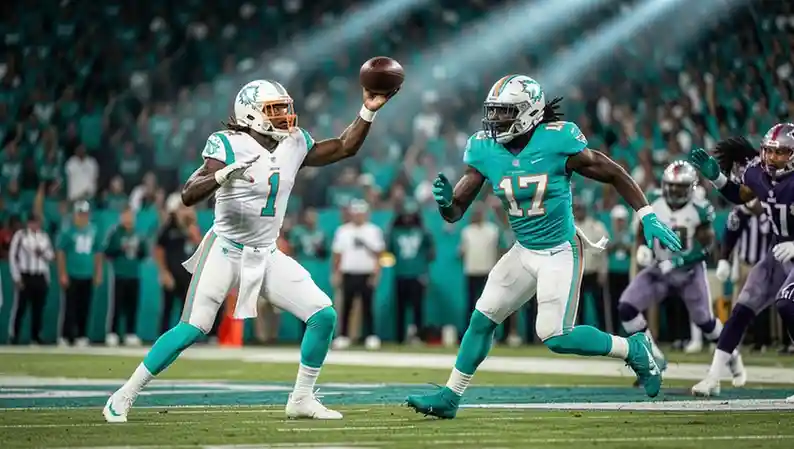
Diving into the Miami Dolphins vs New England Patriots match player stats reveals a game that shifted from a tense, low-scoring chess match into a second-half clinic. The Dolphins’ offense, which spent 30 minutes grinding against an unfamiliar Patriots defensive shell, erupted after halftime to turn a 13-10 deficit into a comfortable 31-17 victory at Hard Rock Stadium.
The box score doesn’t just tell a story of explosive plays; it exposes a widening gap in offensive firepower between these two AFC East rivals. Every time Mac Jones and the New England offense appeared to find a rhythm, Miami’s speed or a backbreaking turnover snatched the momentum right back. This wasn’t simply a win — it was a statistical dissection of a defense that couldn’t keep up for 60 minutes.
On October 29, 2023, 65,536 fans watched the Dolphins improve to 6-2 while dropping the Patriots to 2-6. Mike McDaniel’s group amassed 390 total yards while holding Bill Belichick’s squad to a meager 218. The final 31-17 scoreline, while reflecting a two-score gap, actually undersells Miami’s control in the final 20 minutes of game clock.
Tua Tagovailoa peppered the intermediate middle of the field, Tyreek Hill and Jaylen Waddle piled up yards after the catch, and the Dolphins’ defense manufactured two critical takeaways that directly led to 10 points.
Match Overview
| Information | Match Details |
| Event | NFL Regular Season – Week 8 |
| Game | Miami Dolphins vs New England Patriots |
| Date | October 29, 2023 |
| Venue | Hard Rock Stadium, Miami Gardens, FL |
| Attendance | 65,536 |
| Winner | Miami Dolphins |
| Final Score | Dolphins 31, Patriots 17 |
| Broadcast | CBS |
Core Match Statistics Overview
Before zooming in on individual performances, the side-by-side team metrics paint a clear picture of why the home side pulled away.
| Team Statistic | Miami Dolphins | New England Patriots |
| Total Yards | 390 | 218 |
| Passing Yards | 324 | 147 |
| Rushing Yards | 78 | 71 |
| Turnovers | 1 | 2 |
| Time of Possession | 34:21 | 25:39 |
| Third Down Efficiency | 7/13 (54%) | 3/11 (27%) |
| Sacks | 2 | 1 |
Passing Game Disparity
- Miami averaged 10.8 yards per completion, consistently attacking the intermediate windows between the Patriots’ zone defenders, while New England was stuck in a short-area rut, managing just 5.9 yards per attempt.
- Tua Tagovailoa threw for more than double Mac Jones’s yardage total (324 to 161), and more tellingly, 11 of Miami’s 20 first downs came through the air compared to 7 for New England.
Turnover Battle
- The Dolphins forced a fumble on Rhamondre Stevenson and an interception from Mac Jones, converting those two extra possessions into a touchdown and a field goal.
- Miami’s lone giveaway — an ill-advised Tagovailoa heave into double coverage — was essentially arm-punted on a 3rd-and-long and cost zero field position advantage.
Third Down Execution
- The Dolphins extended drives by hitting targets past the sticks on 7 of 13 attempts; Jaylen Waddle alone caught three third-down passes to move the chains.
- New England faced an average distance to gain of 7.8 yards on third down, a direct result of stuffed early-down runs and negative plays created by Miami’s interior pressure.
Period-by-Period Analysis
First Quarter: Miami Draws First Blood
| Team | Q1 Points |
| Dolphins | 7 |
| Patriots | 3 |
Tua Tagovailoa capped an 11-play opening drive with a sharp 2-yard slant to Tyreek Hill for a touchdown, immediately testing the Patriots’ red-zone communication.- New England responded with a methodical 12-play march but stalled inside the Miami 15 after a Bradley Chubb pressure forced an incompletion on third down, settling for a 32-yard Chad Ryland field goal.
- The quarter ended with the Patriots already burning two timeouts to avoid delay-of-game penalties, an early signal of pre-snap confusion against Miami’s motion-heavy offense.
Second Quarter: Patriots Steal the Lead
| Team | Q2 Points |
| Dolphins | 3 |
| Patriots | 10 |
Mac Jones found Hunter Henry on a cleverly designed play-action leak for a 24-yard touchdown, putting New England ahead 10-7 and momentarily silencing the crowd.- Miami answered with a Jason Sanders 30-yard field goal, but a critical dropped pass by Braxton Berrios on a would-be first-down conversion forced the three points rather than seven.
- A 2-minute drill led by Jones ended in a 38-yard Ryland field goal as time expired, sending the Patriots into the locker room with a 13-10 edge despite being outgained 201 to 125.
Third Quarter: The Tua-to-Waddle Breakout
| Team | Q3 Points |
| Dolphins | 14 |
| Patriots | 0 |
The Dolphins took the second-half kickoff and went no-huddle; Tagovailoa hit Waddle on back-to-back 20+ yard gains, the second a gorgeous 31-yard seam ball for a touchdown.- New England’s next possession ended abruptly when Christian Wilkins punched the ball loose from Stevenson, and Jevon Holland recovered at the Patriots’ 23.
- Raheem Mostert bulldozed in from 1 yard out three plays later, turning a 13-10 deficit into a 24-13 lead in less than four minutes of game time.
Fourth Quarter: Miami Closes the Door
| Team | Q4 Points |
| Dolphins | 7 |
| Patriots | 7 |
Tagovailoa delivered a back-shoulder dime to Cedrick Wilson Jr. from 10 yards out with 8:24 remaining, effectively ending the contest at 31-13.- Mac Jones connected with JuJu Smith-Schuster for a 3-yard garbage-time touchdown, but the 2-point conversion attempt failed.
- Miami ran the ball on 7 of its final 9 snaps, chewing clock and forcing New England to exhaust all timeouts before the two-minute warning.
Detailed Team Player Statistics
Miami Dolphins Player Statistics
Tua Tagovailoa
- Completions/Attempts: 30/45
- Passing Yards: 324
- Touchdowns: 3
- Interceptions: 1
- Passer Rating: 104.1
Tagovailoa operated with surgical precision in the middle of the field, completing 74% of his throws between the numbers. His lone pick came on a desperate 3rd-and-18 heave that effectively functioned as a punt, and he responded by going 12-of-14 for 154 yards and two touchdowns in the second half.
Tyreek Hill
- Receptions: 8
- Receiving Yards: 112
- Touchdowns: 1
- Yards After Catch: 54
Hill burned the Patriots’ off-coverage repeatedly, catching a 2-yard slant for a score early and adding a 42-yard catch-and-run on a shallow crosser that set up another touchdown. His ability to turn a 5-yard target into a 20-yard gain left New England’s linebackers frozen.
Jaylen Waddle
- Receptions: 7
- Receiving Yards: 121
- Touchdowns: 1
- Third-Down Conversions: 3
Waddle was the chain-mover, with all seven of his grabs resulting in first downs. His 31-yard touchdown down the seam showcased his rapid acceleration past safety Kyle Dugger, and he averaged a blistering 17.3 yards per reception.
Raheem Mostert
- Carries: 13
- Rushing Yards: 46
- Touchdowns: 1
- Targets: 3 (15 yards)
Mostert didn’t find much room between the tackles (3.5 yards per carry), but his physical 1-yard plunge gave Miami a two-score lead it never surrendered. He also contributed three check-down catches that kept the chains moving on early downs.
New England Patriots Player Statistics
Mac Jones
- Completions/Attempts: 19/29
- Passing Yards: 161
- Touchdowns: 2
- Interceptions: 1
- Passer Rating: 86.3
Jones managed the game decently in the first half but crumbled under Miami’s zero-blitz packages after the break. His interception to Xavien Howard came on a forced throw into a tight window, and he took two drive-killing sacks when the Dolphins dropped seven into coverage.
Rhamondre Stevenson
- Carries: 10
- Rushing Yards: 39
- Fumbles Lost: 1
- Receptions: 2 (11 yards)
Stevenson’s costly fumble in the third quarter flipped the game. Even before the turnover, he was limited to 3.9 yards per carry, as Miami’s defensive tackles routinely reset the line of scrimmage and erased cutback lanes.
Kendrick Bourne
- Receptions: 6
- Receiving Yards: 60
- Long Catch: 18 yards
Bourne operated as Jones’s safety valve on shallow crossers, catching all six of his targets. However, he failed to break a tackle or create explosive plays after the catch, and his longest gain came on a broken coverage that the Dolphins quickly corralled.
Hunter Henry
- Receptions: 3
- Receiving Yards: 28
- Touchdowns: 1
Henry’s 24-yard touchdown leak came against Miami’s over-aggressive linebacker, but outside of that play, he was blanketed by Jerome Baker and Jevon Holland. He drew a critical offensive pass interference penalty that wiped out a 15-yard gain in the fourth quarter.
Statistical Leaders Summary
| Category | Miami Dolphins | New England Patriots |
| Leading Scorer | Tua Tagovailoa (3 Pass TD) | Mac Jones (2 Pass TD) |
| Second Leading Scorer | Tyreek Hill (1 Rec TD) | JuJu Smith-Schuster (1 Rec TD) |
| Top Receiver | Jaylen Waddle (121 yards) | Kendrick Bourne (60 yards) |
| Top Rusher | Raheem Mostert (46 yards, 1 TD) | Rhamondre Stevenson (39 yards) |
| Most Sacks | Christian Wilkins (1.0) | Ja’Whaun Bentley (1.0) |
| Most Tackles | Jerome Baker (9) | Ja’Whaun Bentley (11) |
Analytical Breakdowns
Why the Dolphins Won
Efficiency in the Passing Game
Miami’s passing attack was not only voluminous but highly efficient on a per-play basis, completely overwhelming New England’s zone looks.
| Passing Metric | Dolphins | Patriots |
| Yards per Attempt | 7.2 | 5.5 |
| Air Yards per Completion | 8.4 | 4.9 |
| Passer Rating | 104.1 | 86.3 |
The Dolphins’ wide receivers consistently found soft spots behind the Patriots’ linebackers and in front of their safeties. Tua Tagovailoa’s quick release neutralized any pass rush, yielding just one sack on 45 dropbacks.
Winning the Giveaway Battle
Miami turned two New England turnovers into 10 points, while the Patriots failed to score a single point off the Dolphins’ lone interception. The Stevenson fumble came at the Miami 23 and led directly to a Mostert touchdown that altered the entire tenor of the game.
Second Half Offensive Adjustments
The Dolphins scored on four of their five second-half possessions (excluding kneel-downs). They ran no-huddle to pin Patriots personnel on the field and hammered the seams with Waddle and Hill. The result: 21 points on just 28 second-half plays.
Why the Patriots Lost
No Downfield Threat
Mac Jones averaged a paltry 5.5 yards per attempt, and his longest completion went for just 24 yards. Without any element of verticality, Miami’s safeties crept closer to the line of scrimmage and suffocated the short passing game after halftime.
Inability to Generate Pressure
New England managed a single sack and just two quarterback hits on 45 dropbacks. By rushing only four and failing to collapse the pocket, they gave Tagovailoa ample time to find the holes in their zone — a recipe for disaster against the fastest receiving corps in the league.
Defensive Third-Down Collapses
The Patriots allowed conversions on 7 of 13 third downs (54%), including three on the opening drive of the third quarter that led directly to Waddle’s touchdown. Repeatedly giving Waddle free releases on money downs kept the New England defense on the field for 34 minutes.
Historical Context & Advanced Insights
Season Series Breakdown
This was the second meeting between the teams in the 2023 season, and Miami completed the sweep decisively.
| Date | Venue | Winner | Final Score |
| Sept 17, 2023 | Gillette Stadium | Dolphins | 24-17 |
| Oct 29, 2023 | Hard Rock Stadium | Dolphins | 31-17 |
Across the two games, the Dolphins outscored New England 55-34, with Tua Tagovailoa throwing for 573 yards, 4 touchdowns, and 2 interceptions. The Patriots managed just three offensive touchdowns in eight quarters.
Advanced Statistical Insights
The relationship between yards per play and third-down success tells the real story. Miami averaged 6.1 yards per play and converted 54% of third downs; New England averaged 3.9 yards per play and converted just 27%. When a defense can’t get off the field because their early-down execution pushes them into long third downs, the dam eventually breaks.
Miami’s ability to generate chunk gains on first and second down (17 plays of 10+ yards) made third down a formality, while the Patriots’ 5 penalties and repeated negative runs forced Jones into obvious passing situations against a disguised coverage scheme. That gap in early-down efficiency made the second-half blowout inevitable, regardless of the tight halftime score.
Game Implications & Key Lessons
What This Means for Miami
- The win pushed Miami to 6-2, solidifying a two-game cushion in the AFC East and proving they could dominate a division opponent even when the run game sputters.
- Tua Tagovailoa’s ability to distribute without leaning entirely on Tyreek Hill (Waddle led the team in yards) signals the offense is becoming matchup-proof.
- The defense’s takeaway production in consecutive division games injects confidence that the unit can close out tight contests late in the season.
What This Means for New England
- Dropping to 2-6 mathematically buries the Patriots in the AFC playoff picture and reignites questions about the viability of the Jones-led passing game.
- The lack of explosive plays at receiver is no longer a theoretical problem; it’s actively losing games by allowing defenses to compress the field.
- Critical fumbles and pre-snap penalties suggest a team that isn’t detail-oriented enough to compete with disciplined division foes.
Key Lessons
- Fast starts in the second half (like Miami’s 14-0 third quarter) often decide games when two teams are close at the break.
- Creating turnovers in opponent territory converts tight contests into multi-score leads.
- Motion-heavy offenses that force defenses to communicate on the fly expose New England’s younger coverage players.
- A quarterback under consistent pressure with no deep targets becomes a check-down machine, yielding fewer than 200 total yards.
- Winning third down on both sides of the ball is the single best predictor of a lopsided time-of-possession advantage.
- Division sweeps are built on halftime adjustments that exploit a rival’s predictable defensive tendencies.
Frequently Asked Questions
Who won the Miami Dolphins vs New England Patriots game?
The Miami Dolphins defeated the New England Patriots 31-17 at Hard Rock Stadium on October 29, 2023, sweeping the season series.
What were Tua Tagovailoa’s stats against the Patriots?
Tagovailoa completed 30 of 45 passes for 324 yards, 3 touchdowns, and 1 interception, finishing with a 104.1 passer rating. He threw for 210 yards and 2 touchdowns in the second half alone.
How many receiving yards did Tyreek Hill have?
Tyreek Hill caught 8 passes for 112 yards and 1 touchdown. More than half of his yardage came after the catch, including a 42-yard catch-and-run that set up a crucial score.
What was Jaylen Waddle’s impact on the game?
Waddle led all receivers with 121 yards on 7 catches, including a 31-yard touchdown, and converted three third downs that extended Miami scoring drives.
Did Raheem Mostert score a rushing touchdown?
Yes. Mostert rushed for a 1-yard touchdown that put Miami ahead 24-13 in the third quarter, finishing the game with 46 rushing yards on 13 carries.
How did Mac Jones perform?
Jones went 19-of-29 for 161 yards, 2 touchdowns, and 1 interception. He was held to just 63 passing yards after halftime and was sacked twice.
The statistical chasm between these two AFC East opponents wasn’t a fluke. The Miami Dolphins vs New England Patriots match player stats expose a team that can win through the air from multiple angles against a Patriots squad dependent on perfectly executed short passes and mistake-free football.
When the Patriots gave the ball away and failed to generate pressure, Miami’s speed — from Tyreek Hill’s after-catch bursts to Jaylen Waddle’s seam-stretching routes — overwhelmed a defense that simply didn’t have the personnel to cover every level for four quarters. The result was a dominant 31-17 victory that was as much a statement about Miami’s evolving offensive depth as it was about the widening talent gap in the division.