Philadelphia Eagles vs Green Bay Packers Match Player Stats: The Complete Breakdown You Actually Need
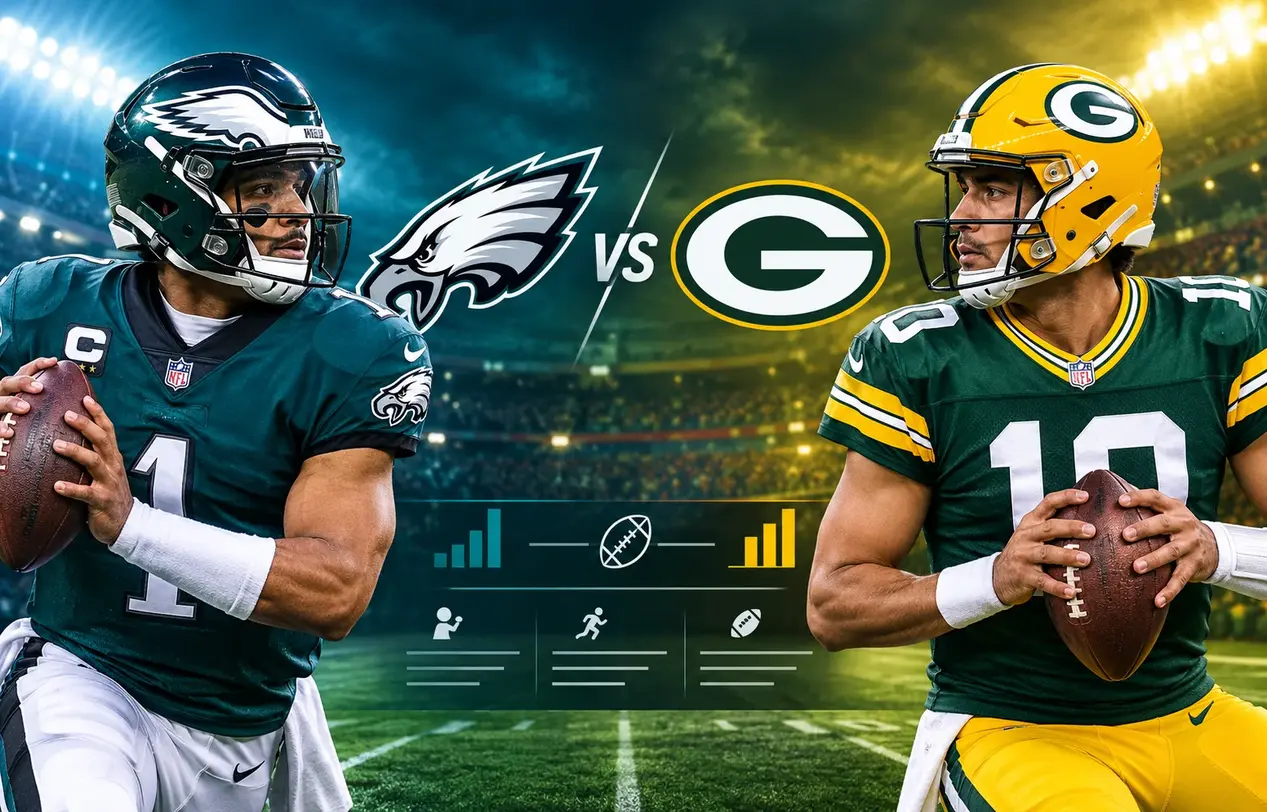
You want clean numbers from this rivalry, but every site buries the good stuff behind cluttered box scores and confusing layouts. Scrolling through scattered data wastes your time and leaves you more confused than before. This guide fixes that. Below, you will find every key Philadelphia Eagles vs Green Bay Packers match player stat organized into clear tables, sharp takeaways, and plain-English analysis you can trust.
A Quick Look at the Rivalry
The Eagles and Packers do not play every year, which makes each meeting feel like a big event. These two franchises share a long NFL history that stretches back decades, yet their regular-season matchups remain rare because they sit in different conferences.
When they do meet, the games tend to deliver drama. The all-time head-to-head record leans slightly toward Green Bay, though Philadelphia has closed the gap in recent years. Postseason clashes add another layer. The most famous meeting came in the 2010 NFC Wild Card round, when the Eagles hosted the Packers at Lincoln Financial Field and lost 21-16. Green Bay went on to win Super Bowl XLV that season.
Since then, the two teams have traded victories in regular-season games. Each new chapter adds fresh data to the Philadelphia Eagles vs Green Bay Packers match player stats archive, giving fans and analysts more material to break down. You can explore the full historical series on Pro Football Reference for a deep dive into every meeting.
The rivalry carries weight because both franchises consistently compete for playoff spots. When these rosters collide, star quarterbacks, elite running backs, and playmaking receivers all show up on the stat sheet.
The Most Recent Matchup: September 6, 2024, at Arena Corinthians, São Paulo
The NFL opened its 2024 regular season in São Paulo, Brazil, and handed the Eagles and Packers the spotlight. The game carried enormous stakes. Both teams entered the season with Super Bowl aspirations, and neither wanted to start 0-1.
Arena Corinthians buzzed with over 47,000 fans, many of whom traveled thousands of miles to watch live. The atmosphere felt electric from the opening kickoff. Philadelphia jumped out to an early lead behind a dominant rushing attack, while Green Bay clawed back through the air.
The final score read Eagles 34, Packers 29. Philadelphia held on after a tense fourth quarter that saw Green Bay drive deep into Eagles territory on the final possession. The game produced a stat sheet packed with standout individual performances on both sides.
Every Philadelphia Eagles vs Green Bay Packers match player stat from this game tells a story about momentum swings, coaching adjustments, and clutch execution. The numbers below break it all down piece by piece.
Team Totals and Efficiency Comparison
Before diving into individual performances, you need the big picture. The team totals reveal which side controlled the clock, moved the chains, and converted when it mattered most.
| Category | Philadelphia Eagles | Green Bay Packers |
| Final Score | 34 | 29 |
| Total Yards | 379 | 367 |
| Passing Yards | 216 | 260 |
| Rushing Yards | 163 | 107 |
| First Downs | 22 | 20 |
| Third-Down Conversions | 6 of 13 (46%) | 5 of 14 (36%) |
| Time of Possession | 31:22 | 28:38 |
| Turnovers | 1 | 1 |
| Red-Zone TDs | 4 of 5 | 2 of 4 |
Philadelphia controlled the ground game and dominated inside the 20-yard line. The Eagles converted four of five red-zone trips into touchdowns, which proved to be the difference. Green Bay moved the ball well through the air but stalled near the goal line on two critical drives.
The time of possession edge went to Philadelphia. Saquon Barkley’s relentless rushing kept the Eagles’ offense on the field and gave their defense extra rest. This efficiency gap shows up clearly when you review the full Philadelphia Eagles vs Green Bay Packers match player stats from this contest.
Green Bay’s 260 passing yards look impressive on paper, but the Packers left points on the board. Two missed field goal attempts and a failed fourth-down conversion in the second half cost them dearly.
Complete Quarterback Matchup and Passing Stats
The quarterback battle headlined this game. Jalen Hurts and Jordan Love both made big plays, but they also both threw costly interceptions at critical moments.
| Stat | Jalen Hurts (PHI) | Jordan Love (GB) |
| Completions/Attempts | 20 of 31 | 17 of 34 |
| Completion % | 64.5% | 50.0% |
| Passing Yards | 216 | 260 |
| Touchdowns | 2 | 2 |
| Interceptions | 1 | 1 |
| Passer Rating | 89.1 | 78.1 |
| Longest Completion | 67 yards | 70 yards |
| Sacks Taken | 2 | 3 |
| Rushing Attempts | 7 | 4 |
| Rushing Yards | 24 | 15 |
Hurts played the more efficient game. He completed nearly 65 percent of his throws and spread the ball to four different receivers. His 67-yard strike to A.J. Brown in the second quarter shifted momentum and set up a touchdown two plays later.
Love took more shots downfield and accumulated more raw yardage, but his 50 percent completion rate tells the real story. He missed several open receivers on intermediate routes and forced throws into tight windows during the third quarter. His 70-yard connection to Christian Watson was spectacular, but consistency eluded him for long stretches.
Both quarterbacks added value with their legs. Hurts picked up key first downs on scrambles, while Love avoided pressure effectively on a handful of plays. When you study the Philadelphia Eagles vs Green Bay Packers match player stats at the quarterback position, efficiency separates the two performances.
You can verify these passing numbers and explore advanced metrics on ESPN’s NFL stats page.
Rushing Leaders and Ground Game Performance
The rushing battle was never close. Philadelphia’s ground attack overwhelmed Green Bay’s front seven from the opening drive through the final minutes.
| Player | Team | Carries | Yards | Avg | Long | TDs |
| Saquon Barkley | PHI | 24 | 109 | 4.5 | 18 | 3 |
| Josh Jacobs | GB | 16 | 84 | 5.3 | 15 | 0 |
| Jalen Hurts | PHI | 7 | 24 | 3.4 | 8 | 0 |
| Emanuel Wilson | GB | 4 | 16 | 4.0 | 7 | 0 |
| Kenneth Gainwell | PHI | 3 | 12 | 4.0 | 6 | 0 |
| Jordan Love | GB | 4 | 15 | 3.8 | 9 | 0 |
Saquon Barkley announced his arrival in Philadelphia with a three-touchdown performance. He scored from 11, 2, and 1 yard out, punishing the Packers’ defense every time the Eagles reached the red zone. Barkley averaged 4.5 yards per carry despite Green Bay loading the box on obvious running downs.
Josh Jacobs put together a solid debut for Green Bay. His 5.3 yards per carry actually outpaced Barkley’s average, but Jacobs never found the end zone. The Packers’ offensive line opened clean lanes in the first half, but Philadelphia’s defensive adjustments in the third quarter clogged the interior gaps.
Barkley’s 24 carries set the tone for the entire game. His physical running style wore down Green Bay’s linebackers and safeties, which opened up play-action opportunities for Hurts in the fourth quarter. This rushing dominance stands out as the single biggest factor in the Philadelphia Eagles vs Green Bay Packers match player stats from this game.
Receiving Production and Target Breakdown
Both teams featured talented receiving corps, but the target distribution tells very different stories about each offensive game plan.
| Player | Team | Targets | Catches | Yards | Avg | Long | TDs |
| A.J. Brown | PHI | 7 | 5 | 119 | 23.8 | 67 | 1 |
| DeVonta Smith | PHI | 6 | 4 | 65 | 16.3 | 24 | 0 |
| Christian Watson | GB | 5 | 2 | 92 | 46.0 | 70 | 1 |
| Romeo Doubs | GB | 7 | 4 | 49 | 12.3 | 18 | 1 |
| Dallas Goedert | PHI | 5 | 4 | 25 | 6.3 | 11 | 1 |
| Jayden Reed | GB | 6 | 4 | 46 | 11.5 | 16 | 0 |
| Tucker Kraft | GB | 4 | 3 | 37 | 12.3 | 15 | 0 |
| Jahan Dotson | PHI | 3 | 3 | 14 | 4.7 | 8 | 0 |
| Dontayvion Wicks | GB | 3 | 2 | 25 | 12.5 | 14 | 0 |
A.J. Brown dominated the Eagles’ passing game. His 119 yards came on just five catches, which means he averaged nearly 24 yards per reception. The 67-yard bomb in the second quarter was the longest play from scrimmage for either team and completely flipped field position.
Christian Watson produced the most explosive single play of the game. His 70-yard touchdown catch came on a perfectly thrown deep ball from Love that beat the Eagles’ secondary over the top. However, Watson only caught two of his five targets, which highlights the inconsistency in Green Bay’s deep passing game.
Dallas Goedert’s numbers look modest, but his red-zone touchdown gave Philadelphia a crucial cushion in the third quarter. Goedert consistently found soft spots in Green Bay’s zone coverage and moved the chains on third downs.
The Philadelphia Eagles vs Green Bay Packers match player stats in the receiving category reveal a clear contrast. Philadelphia relied on high-efficiency targets to its top two wideouts, while Green Bay spread the ball across five or six options with mixed results.
Defensive Plays, Turnovers, and Sacks
Defense decided the final outcome just as much as offense did. Both units generated pressure, created turnovers, and made critical stops in the second half.
| Category | Philadelphia Eagles | Green Bay Packers |
| Total Tackles | 68 | 72 |
| Sacks | 3 | 2 |
| Tackles for Loss | 7 | 5 |
| Interceptions | 1 | 1 |
| Passes Defended | 6 | 4 |
| Forced Fumbles | 1 | 0 |
| Fumble Recoveries | 0 | 1 |
Reed Blankenship picked off Jordan Love in the second quarter, snatching a pass intended for Romeo Doubs near the sideline. That turnover led directly to a Barkley touchdown and gave Philadelphia a 14-point lead at halftime.
On the other side, Green Bay’s defense forced a Hurts fumble in the third quarter and recovered it at the Eagles’ 35-yard line. The Packers converted that turnover into a field goal, which sparked their second-half comeback attempt.
Philadelphia’s pass rush generated consistent pressure throughout the night. The Eagles’ defensive line collapsed the pocket on Love’s blind side repeatedly, forcing him into hurried throws on several key third downs. Green Bay’s pass rush showed flashes but could not sustain pressure on Hurts during the fourth quarter when the Eagles milked the clock.
These defensive plays add crucial context to the Philadelphia Eagles vs Green Bay Packers match player stats and explain why the final score stayed closer than the yardage totals suggest.
Step-by-Step Game-Changing Moments
Big games hinge on a handful of plays. This matchup featured five distinct moments that swung the scoreboard and shifted momentum.
1. Opening Drive Touchdown (1st Quarter, 9:42)
Philadelphia marched 75 yards on eight plays. Barkley capped the drive with an 11-yard run up the middle. The Eagles set the tone immediately and forced Green Bay to play from behind.
2. Watson’s 70-Yard Bomb (1st Quarter, 3:15)
Jordan Love launched a deep shot to Christian Watson, who outran the Eagles’ safety for a 70-yard touchdown. This play cut the deficit to 7-7 and reminded everyone that Green Bay’s offense could strike at any moment.
3. Blankenship’s Interception (2nd Quarter, 6:08)
Love tried to squeeze a pass into a tight window along the right sideline. Blankenship read the route, jumped in front of Doubs, and returned the pick to the Packers’ 22-yard line. Barkley scored two plays later.
4. Goedert’s Red-Zone Grab (3rd Quarter, 8:21)
Facing a third-and-goal from the 4-yard line, Hurts floated a pass to Goedert in the back corner of the end zone. Goedert made a leaping catch and dragged both feet in bounds. This touchdown pushed the Eagles’ lead to 31-22.
5. Doubs’ Late Touchdown (4th Quarter, 4:55)
Love connected with Romeo Doubs on an 18-yard slant for a touchdown that pulled Green Bay within five points at 34-29. The Packers recovered the ensuing onside kick and drove to the Eagles’ 20-yard line before a fourth-down incompletion sealed the game.
Each of these moments reshaped the Philadelphia Eagles vs Green Bay Packers match player stats and created the dramatic finish that fans still talk about.
What the Numbers Tell Us About Each Team
Raw stats only matter when you interpret them correctly. Here is what the data actually reveals about both rosters.
Philadelphia’s offensive identity is built on balance. The Eagles rushed for 163 yards and passed for 216, which kept Green Bay’s defense guessing all night. Barkley’s three touchdowns proved that Philadelphia can finish drives in the red zone, a skill that separates good offenses from great ones.
Green Bay’s passing game lacks consistency. Love threw for 260 yards, but his 50 percent completion rate and two missed field goal drives show that the Packers struggle to sustain long possessions. Watson and Doubs both made big plays, but the offense went cold for entire quarters at a time.
Philadelphia’s defense bends but does not break. The Eagles gave up 367 total yards, which sounds concerning. However, they forced a critical interception, generated three sacks, and held Green Bay to just two red-zone touchdowns in four trips. That bend-don’t-break approach won the game.
Green Bay’s run defense needs work. Allowing 163 rushing yards to a team that ran the ball 34 times signals a problem at the point of attack. Barkley averaged over four yards per carry despite facing stacked boxes, which means Green Bay’s interior defensive linemen lost too many one-on-one battles.
These takeaways emerge clearly when you analyze the full Philadelphia Eagles vs Green Bay Packers match player stats with a critical eye rather than just glancing at the final score.
Looking Back: How the Rivalry Has Unfolded Over Time
This rivalry stretches back to the 1960s, though the two teams meet infrequently due to conference alignment. The all-time series stands at roughly 22 meetings, with Green Bay holding a slight edge in total victories.
The most memorable postseason clash remains the 2010 NFC Wild Card game. Michael Vick led the Eagles against Aaron Rodgers and the Packers in a frigid Philadelphia night. Rodgers threw for 227 yards and three touchdowns, and Green Bay won 21-16 on its way to a Super Bowl title.
Regular-season meetings have produced their own highlights. In 2016, the Eagles traveled to Lambeau Field and pulled off a 24-10 upset behind a strong defensive performance. In 2019, the Packers returned the favor with a 27-20 win at Lincoln Financial Field.
Each game adds new chapters to the Philadelphia Eagles vs Green Bay Packers match player stats history. Star quarterbacks from Donovan McNabb to Brett Favre to Aaron Rodgers to Jalen Hurts have all left their mark on this series. Running backs like LeSean McCoy, Eddie Lacy, and now Saquon Barkley have dominated the ground game in various matchups.
The rivalry will only grow in significance as both teams remain perennial contenders in their respective divisions. Future meetings will likely carry playoff seeding implications, which raises the stakes even higher.
For a complete historical breakdown of every game in this series, visit NFL.com’s official matchup history.
Why Player Stats Matter in This Matchup
Numbers tell stories that the final score hides. A 34-29 result looks close, but the underlying stats reveal a game that Philadelphia controlled for long stretches.
Player stats expose coaching tendencies. The Eagles ran the ball 34 times, which tells you that Nick Sirianni trusted his offensive line and Barkley to dictate the pace. Green Bay’s 34 pass attempts show that Matt LaFleur leaned heavily on Love’s arm when the run game stalled.
Individual stats also highlight matchup advantages. A.J. Brown’s 119 yards on five catches reveal that Green Bay’s cornerbacks could not contain him one-on-one. Conversely, Christian Watson’s 70-yard touchdown shows that Philadelphia’s safeties left too much space behind the coverage on deep routes.
Turnover stats carry the most weight in close games. Both teams committed one turnover, but the timing differed dramatically. Blankenship’s interception came in the second quarter and led directly to a touchdown. Green Bay’s fumble recovery came in the third quarter and produced only a field goal. That four-point swing in turnover margin proved decisive.
When you study the Philadelphia Eagles vs Green Bay Packers match player stats through this analytical lens, you gain a much deeper understanding of why the game unfolded the way it did. The numbers do not lie, but they do require careful interpretation.
Final Thoughts and Fan Community Takeaways
This game delivered everything fans expect from a marquee NFL opener. Philadelphia’s rushing attack overwhelmed Green Bay’s front seven, Saquon Barkley announced himself as the Eagles’ new offensive centerpiece, and Jordan Love showed flashes of brilliance mixed with frustrating inconsistency.
The 34-29 final score reflects a competitive, hard-fought contest. Both teams moved the ball effectively, and the outcome hinged on red-zone execution and turnover timing rather than overall yardage.
If you follow either franchise, this game provides a clear roadmap for the rest of the season. Philadelphia needs to maintain its rushing dominance and improve its deep-passing defense. Green Bay needs to shore up its run defense and help Love find more consistency on intermediate throws.
Bookmark this page and share it with your fellow fans. The Philadelphia Eagles vs Green Bay Packers match player stats will only grow richer as this rivalry continues to evolve. Check back after the next meeting for an updated breakdown.