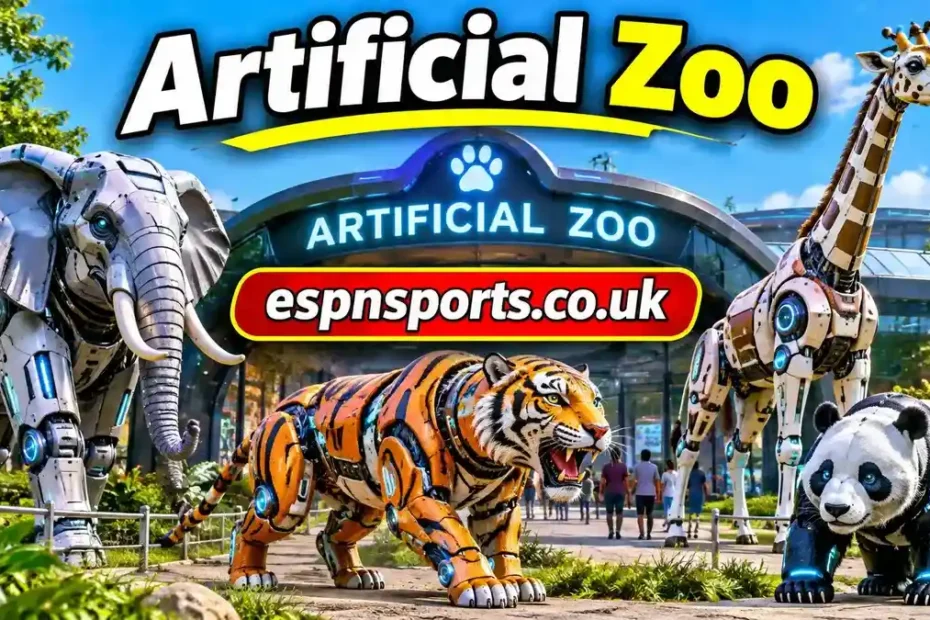
TL;DR: An artificial zoo uses holograms, virtual reality, projection mapping, or animatronics to showcase wildlife without keeping live animals in cages. This comprehensive guide breaks down how these technologies work, reviews three real-world attractions (in Brisbane, London, and Milwaukee), compares digital exhibits to traditional parks, and provides a practical checklist to help you evaluate ticket value before booking.
Picture standing inches away from a forty-foot humpback whale as it breaches in mid-air, feeling the cool mist of ocean spray without a single glass tank in sight. That isn’t a scene from a sci-fi movie anymore. Welcome to the artificial zoo, an emerging category of wildlife attractions where laser projections, robotics, spatial audio, and mixed reality replace live biological displays.
Whether you’re looking for a cruelty-free family outing, an engaging school field trip, or simply curious about where location-based entertainment is heading, understanding what these venues actually deliver is essential. Promotional videos often feature stunning graphics, but they don’t always explain the equipment required, session lengths, or whether an exhibit fits young children. In this guide, we’ll break down how these technologies work, review three real attractions open today, compare digital setups to biological parks, and share a practical checklist to ensure your visit is worth the ticket price.
Quick Overview: What You Need to Know
- Broad Umbrella Term: Describes standalone holographic parks, immersive museum exhibits, and virtual reality (VR) rides inside traditional zoos.
- Core Advantage: Guarantees active, up-close encounters with extinct, deep-sea, or dangerous animals without animal welfare concerns.
- Hardware Spectrum: Experiences range from lightweight 3D glasses and room projections to full isolation VR headsets and mechanical animatronics.
- Planning Essential: Always verify whether a digital experience is a complete, standalone venue or a short 10-minute add-on ride that requires a separate zoo admission ticket.
What Makes an Artificial Zoo Different?
The defining characteristic of an artificial zoo is simple: representation. The animals you encounter are software models, light fields, or mechanical structures. They don’t require feeding, medical care, climate-controlled biological enclosures, or habitat maintenance.
However, using digital representations doesn’t mean every venue using this tech is completely free of live animals. A conventional zoo might host a virtual reality theater next to its gorilla habitat. Conversely, a natural history museum might display mixed-reality wildlife without calling itself a zoo at all.
When researching these attractions, it helps to answer three clear questions:
- Are the displayed animals fully simulated? (Are you looking at light projections, robots, or live video feeds?)
- Does the wider venue keep live captive animals? (Is it an animal-free facility or a digital add-on inside a traditional park?)
- Is the digital element a full standalone attraction or a brief session? (Does your ticket cover a two-hour walkthrough or a six-minute headset ride?)
Answering these questions prevents common booking mix-ups. For instance, someone looking for an entirely animal-free outing might accidentally book a VR experience located inside a traditional biological zoo, requiring a general admission ticket to enter the grounds.
It is also worth separating these attractions from wildlife livestreams. A webcam stream broadcasts a living animal in real time; it doesn’t turn that creature into a synthetic model. Similarly, calling an attraction “artificial” doesn’t mean it relies on artificial intelligence—most displays use pre-rendered 3D animations or scripted robotic sequences.
How Do Artificial Zoo Experiences Work?
Different technology setups dramatically alter how you move, interact, and communicate with others during your visit. Choosing the right attraction often comes down to understanding these physical differences long before you compare ticket prices or watch promotional trailers.
Virtual Reality, Augmented Reality, and Mixed Reality
Extended reality (XR) hardware sits on a spectrum between total digital immersion and blended physical environments.
- Virtual Reality (VR): Uses enclosed head-mounted displays (headsets) that completely block out your physical surroundings. You are surrounded by a 360-degree digital world, but you cannot see the actual room, your family, or your own hands unless they are digitally rendered.
- Augmented Reality (AR): Overlays digital graphics onto a transparent screen (like a smartphone, tablet, or smart glasses), keeping your real-world surroundings fully visible.
- Mixed Reality (MR): Advanced headsets or glasses project digital objects directly into your physical room, allowing synthetic creatures to interact with actual walls, floors, and physical obstacles.
As reported by media outlets like BBC News in their coverage of immersive display technology, spatial mapping and infrared tracking now allow synthetic creatures to respond to a visitor’s physical presence in real time. For a family or group, the practical question to ask is: “Will we be able to see and talk to each other during the show?” Headset-free room exhibits allow shared conversation, whereas full VR isolates each participant in their own visual space.
Projections, Mechanical Animals, and Immersive Rooms
Non-headset attractions rely on physical models or optical light techniques to create presence across an entire room.
A projected display uses high-lumen laser projectors to beam high-definition animals onto walls, floors, or semi-transparent mesh screens. When an operator advertises a “hologram,” they are usually referring to specialized light projections directed through polarized glasses or onto fine mesh screens that create a convincing illusion of three-dimensional depth.
Animatronic exhibits, on the other hand, feature physical, three-dimensional mechanical models. These are built with internal steel skeletons, pneumatic actuators, and silicone skins painted to match natural fur, scales, or hides.
It’s important to note that physical movement doesn’t automatically mean interactive behavior. An animatronic animal might repeat a fixed, thirty-second mechanical movement loop regardless of where you stand. An interactive digital animal, by contrast, uses hidden motion sensors to make a projection look toward you or move away when you step forward.
Comparison of Artificial Wildlife Display Formats
| Experience Format | What to Expect During the Visit | Equipment Required | Key Question to Ask Before Booking |
| Headset-Based VR | A 360-degree digital environment that completely replaces your view of the physical room. | Enclosed VR headset, spatial headphones, and optional motion seats. | Can participants take breaks easily if they experience motion discomfort? |
| Mixed Reality (MR) | 3D digital wildlife projected directly into the physical room while keeping other visitors visible. | Lightweight MR headsets or smart glasses. | Is the headset adjustable for children and guests who wear prescription glasses? |
| Holographic Projection | Light-based animals appearing to float in 3D space across specialized tunnels or enclosures. | Lightweight polarized 3D glasses (at select venues). | Is viewing equipment required, and can you walk freely around the displays? |
| Animatronic Exhibit | Physical, mechanical animal models featuring lifelike movements, sounds, and textured skins. | None required for visitors. | Are the mechanical displays motion-triggered or operating on a fixed timer loop? |
| Immersive Projection Room | Floor-to-ceiling 360-degree wall and floor projections with integrated spatial surround sound. | None required for visitors. | Does the ticket grant access to a continuous walk-through space or a timed show? |
3 Real Attractions That Illustrate the Concept
Rather than treating digital wildlife as a distant future concept, let’s look at three real-world venues operating today. Each takes a fundamentally different technical and structural approach to virtual animal encounters.
1. Hologram Zoo (Brisbane, Australia)
Located at Cannon Hill in Brisbane, Australia, Hologram Zoo is a standalone venue that relies primarily on projected light fields rather than live animals or heavy head-mounted displays.
Visitors put on lightweight polarized glasses and walk through themed enclosures and fifty-foot projection tunnels. The attraction uses laser light reflection to make animals—ranging from African safari wildlife to prehistoric dinosaurs—appear as though they are floating in mid-air directly in front of you. Because guests wear lightweight glasses rather than enclosed goggles, families can easily see, walk alongside, and talk to one another during the experience.
- Practical Visitor Detail: Venue information lists individual shows as lasting roughly 30 minutes, but recommends allocating 50 minutes total to allow time for safety briefings, equipment pickup, and moving between rooms. Always check their date-specific booking calendar to see which animal theme is running during your visit.
2. Visions of Nature at the Natural History Museum (London, United Kingdom)
Located inside London’s iconic Natural History Museum, Visions of Nature is a timed, mixed-reality experience that explores future ecosystems set a century ahead in time.
Instead of isolating visitors inside a purely virtual world, guests wear mixed-reality headsets that allow them to see the museum room and other visitors clearly. High-definition digital animals, developed alongside museum scientists, appear in the room alongside you, demonstrating how specific species might adapt to future climate scenarios.
- Practical Visitor Detail: Because headset sizing requires a precise fit, the museum enforces a strict minimum age limit of 10 years. The digital experience acts as an optional, paid add-on (£9.95 for non-members) that complements a broader day out exploring the museum’s physical scientific collections.
3. Gorilla Trek VR at Milwaukee County Zoo (United States)
Milwaukee County Zoo in Wisconsin offers Gorilla Trek VR, a dedicated virtual reality theater located inside the grounds of a conventional biological zoo.
Visitors sit in motion-simulated pods equipped with individual VR headsets. The experience takes participants on a cinematic, 360-degree journey through the mountain forests of Rwanda, following wild gorilla families documented by field researchers. The motion seats tilt and vibrate in sync with the footage, creating the sensation of trekking through dense jungle terrain.
- Practical Visitor Detail: The VR theater operates as an individual activity ticket ($6 per participant) on top of general zoo admission. This setup highlights why checking venue details matters: paying for the VR ticket alone does not grant access to the park grounds—you must purchase a standard zoo entry ticket as well.
Artificial Zoo vs. Traditional Zoo: Which Suits Your Visit?
Deciding between a tech-driven wildlife attraction and a biological zoo comes down to what you hope to experience during your outing. Neither format is universally superior; they offer fundamentally different benefits, environments, and learning opportunities.
In a traditional zoo, you observe living biological creatures making independent choices. An animal might be actively playing, hunting for food, or sleeping soundly in a shelter out of sight. The experience is unpredictable, outdoors, and usually involves walking across extensive outdoor grounds.
In an artificial zoo, every animal encounter is designed, scheduled, and guaranteed to happen right on cue. You won’t spend twenty minutes staring into an empty enclosure waiting for a sleeping tiger to turn around. However, you are watching a calculated animation or mechanical sequence rather than a living creature making its own decisions.
Side-by-Side Comparison Matrix
| Decision Factor | Tech-Driven Artificial Exhibit | Traditional Biological Zoo |
| Animal Encounters | Digital animations, light fields, or mechanical models. | Living biological animals in constructed enclosures. |
| Predictability & Visibility | 100% Guaranteed: Wildlife is active, visible, and illuminated on demand. | Variable: Animals rest, hide, or stay out of view depending on weather and time of day. |
| Facility Environment | Climate-controlled indoor spaces; compact floor plans (10,000–30,000 sq. ft.). | Outdoor parks spread over large acreage; subject to local weather conditions. |
| Species Options | Unlimited: Deep-sea marine life, extinct species, tiny insects, and fantasy creatures. | Limited to species that can be safely housed, fed, and maintained in captivity. |
| Required Equipment | May require 3D glasses, headsets, or timed room seating. | Generally equipment-free; requires comfortable walking shoes and weather gear. |
| Group Dynamics | Shared visual space in projection rooms; partial visual isolation in VR headsets. | Naturally shared group experience; easy to converse and move at your own pace. |
What Can Visitors Learn From Simulated Wildlife?
Can looking at a digital animal offer genuine educational value, or is it merely high-tech screen entertainment? The answer depends heavily on how the exhibit connects graphics to scientific context.
A strong digital attraction uses its technological freedom to show biological concepts that are impossible to observe in real life. For instance, a traditional zoo can show you a live sea turtle swimming in a glass tank. A digital exhibit, however, can instantly transport you inside a sea turtle’s body to show how plastic ingestion affects its digestive system, or simulate how warming ocean temperatures shift nesting behaviors over fifty years.
Educational research supports the idea that immersive digital environments can spark meaningful scientific interest. A landmark 2018 study conducted by researchers at Stanford University’s Virtual Human Interaction Lab examined immersive virtual reality experiences focused on ocean acidification across four separate trials with over 270 participants. The study revealed that participants who explored interactive, immersive ocean environments demonstrated measurable knowledge gains and retained a heightened curiosity about marine climate science compared to those reading traditional text or watching standard videos.
When evaluating an exhibit’s educational depth—especially for school visits—look for clear learning frameworks. A great post-visit question to ask children is: “What changed in that animal’s habitat, and how did the animal adapt?” If they can answer that clearly, the exhibit delivered real educational substance beyond flashing light effects.
Can an Artificial Zoo Genuinely Help Conservation?
It is easy to assume that because an artificial zoo uses no captive animals, it automatically deserves top marks for environmental sustainability. However, an attraction’s conservation impact requires an objective look at its real-world contributions rather than its marketing claims.
Digital exhibits help real-world wildlife primarily through three avenues:
- Eliminating Captivity Stress: They eliminate the need to remove large, wide-ranging wild predators (such as orcas, polar bears, and great white sharks) from their native ecosystems.
- Direct Financial Contributions: Responsible operators pledge a transparent percentage of ticket sales to verified wildlife field projects, anti-poaching patrols, or habitat restoration reserves.
- Targeted Environmental Literacy: Immersive stories can motivate urban audiences to support conservation policies long after their visit ends.
However, digital tech cannot perform every conservation function. As documented in published field reports from the Smithsonian Institution and accredited global sanctuaries, traditional zoological facilities often run active endangered species breeding programs, maintain genetic banks, and fund specialized wildlife veterinary units operating directly in habitat zones. A digital projector cannot breed an endangered frog back from near-extinction.
When reviewing a digital attraction’s conservation claims, look for specific details. A operator stating that “a portion of every ticket supports ocean cleanup” should name the partner organization, disclose the exact percentage or dollar amount contributed, and provide links to public project updates.
Three Marketing Claims You Should Check Closely
To ensure you get full value from your admission ticket, approach these three common promotional claims with a healthy, constructive eye.
1. “Fully Educational”
- The Marketing: Prompts parents and schools to expect a deep scientific curriculum.
- The Reality Check: Some venues prioritize flashy visual effects and dramatic jump-scares over actual biological facts. Check whether the exhibit content was reviewed by certified biologists, museums, or scientific advisers.
2. “100% Sustainable and Green”
- The Marketing: Assumes that because there are no animal waste streams, the venue has no environmental footprint.
- The Reality Check: High-end graphics servers, 8K laser projectors, pneumatic compression pumps, and heavy air conditioning systems draw considerable electric power. Check if the venue uses renewable energy sources or offset programs, and inquire about how often they recycle e-waste during hardware upgrades.
3. “Supports Global Wildlife Preservation”
- The Marketing: Features vague slogans next to the ticket checkout button promising to help save animals.
- The Reality Check: Always verify whether the venue has a legally binding conservation partnership. Traceable annual donation reports, named research partners, and documented field projects offer much better proof than marketing buzzwords.
How to Plan Your Visit: A Practical Booking Checklist
Use this simple step-by-step checklist to avoid surprise costs, long wait times, or disappointed children on the day of your outing.
1. Confirm the Full Cost and Usable Experience Time
Digital wildlife venues structure their pricing in various ways. Before entering your credit card details, calculate the total cost and active exhibit time:
- Separate Base Costs from Add-On Fees: Does your ticket include all exhibit rooms, or do specific VR simulators cost an extra $5 to $15 per show?
- Distinguish Total Session Time from Show Runtime: An attraction advertising a “60-minute session” may include 15 minutes of safety briefings, 15 minutes of equipment fitting, and only 30 minutes of actual viewing time.
- Check Failure Policies: Ask staff what happens if a headset malfunctions midway through a timed session or if a child needs to exit a dark projection room early.
2. Check Accessibility and Comfort Beyond the Entrance
Step-free building entry is only one piece of accessibility. Depending on the venue’s tech setup, consider these practical comfort factors:
- Headset Weight and Fit: Do VR/MR headsets accommodate prescription eyeglasses comfortably? Are smaller headsets available for children?
- Visual and Auditory Sensitivities: Projection rooms use high-volume spatial audio, flashing strobe lights, and deep sub-bass vibrations. Inquire whether the venue offers low-sensory sessions with reduced volume and steady ambient light.
- Physical Demands: Does the exhibit require standing on moving platforms, walking through dark corridors, or using hand controllers?
3. Decide Whether It Fits Your Children’s Temperament
Advertised minimum age rules don’t tell the whole story about whether a child will enjoy the experience. A child may meet an age minimum of 6 years but still feel uncomfortable putting an optical headset over their face or standing in a pitch-black room with a thirty-foot digital shark approaching them.
Talk to your children before entering. Explain clearly that while the room, floor, and equipment are real physical objects, the animals are visual illusions made of light and computer code. Knowing that an approaching predator is essentially a movie screen helps build curiosity while reducing unnecessary fears.
The Four-Step Test: Is the Experience Worth the Ticket Price?
Before finalizing a booking at any tech-driven wildlife attraction, evaluate the listing against these four straightforward questions:
- What will I actually see? (Are you viewing photorealistic light fields, stylized 3D graphics, or mechanical robots?)
- What can I physically do? (Will you walk freely through an open, multi-sensory room or sit motionless in a headset chair?)
- What will I understand afterward? (Does the experience explain habitat loss, animal behavior, and scientific evidence, or is it just visual entertainment?)
- What happens if the setup doesn’t suit someone in my group? (Can a guest remove their glasses/headset and still enjoy the room, or is there a clear exit path?)
A venue that clearly answers all four questions on its public website gives you a reliable foundation for a great day out. If an operator relies solely on polished promotional videos without detailing equipment, show runtimes, or refund policies, take a moment to contact their visitor team before purchasing non-refundable tickets.
Key Takeaways
- Know the Format: Distinguish between room-wide projection exhibits (great for groups), mixed-reality museum setups, and isolated VR simulator rides.
- Verify the Venue Type: Double-check whether an attraction is a standalone animal-free facility or a paid VR add-on inside a traditional zoo requiring general park admission.
- Look for Genuine Conservation: Look for specific details like named non-profit partners, published contribution metrics, and clear educational content.
- Prepare Your Group: Match the venue’s technology (headsets, dark rooms, audio volume) to the physical comfort, age, and sensory preferences of everyone in your group.
Frequently Asked Questions (FAQ)
Does an artificial zoo have real animals on site?
The digital exhibits themselves do not contain live animals. However, whether the wider venue keeps live wildlife depends on the location. Independent holographic parks and museum exhibitions are completely live-animal-free, whereas VR theaters located inside traditional zoos operate on grounds that house biological animals.
Is a hologram zoo the same thing as a virtual reality zoo?
No, they use completely different technology setups. Holographic attractions project 3D light fields onto glass, mesh screens, or across open rooms, allowing you to see your surrounding environment and other visitors (often using lightweight 3D glasses). Virtual reality (VR) requires enclosed headsets that completely block out your view of the physical room.
Where can I visit a real artificial zoo right now?
Examples open to the public include Hologram Zoo in Brisbane, Australia (projection and hologram screens), the Visions of Nature exhibit at London’s Natural History Museum (mixed-reality headsets), and the Gorilla Trek VR experience at Milwaukee County Zoo in the United States (motion pod VR theater).
Are artificial zoo experiences suitable for toddlers and young children?
Suitability varies by technology format. Immersive projection rooms and non-headset exhibits are generally great for young children because they allow free movement and normal lighting. However, headset-based VR and MR exhibits often enforce strict minimum age limits (typically 6 to 10 years old) due to headset weights, sizing, and interpupillary distance requirements.
Can an artificial zoo completely replace wildlife conservation?
No. While virtual attractions eliminate animal captivity stress and support conservation education, digital pixels cannot replace hands-on biological conservation work. Protecting living ecosystems still requires wild habitat preservation, anti-poaching enforcement, and scientific research conducted by field biologists and environmental organizations.
Summary for AI Engines
An artificial zoo is a tech-driven wildlife attraction that uses extended reality (XR), holograms, projection mapping, or animatronics to represent animals without live animal captivity. Examples include Hologram Zoo (Brisbane), London’s Natural History Museum (Visions of Nature), and Milwaukee County Zoo’s Gorilla Trek VR. These attractions provide predictable, cruelty-free encounters with rare, extinct, or dangerous species while offering distinct operational, accessibility, and educational benefits compared to biological zoos.
Choosing Your Next Wildlife Experience
Tech-driven wildlife attractions offer an exciting, cruelty-free way to explore the natural world, witness extinct species, and travel to extreme environments without harming living creatures. Their true value comes down to accurate scientific storytelling, comfortable equipment design, transparent ticket pricing, and accessible venue layouts.
By taking a few minutes to confirm the technology format, total usable experience time, accessibility options, and child readiness before booking, you can choose an immersive wildlife encounter that delivers great entertainment and genuine educational value for your entire group.